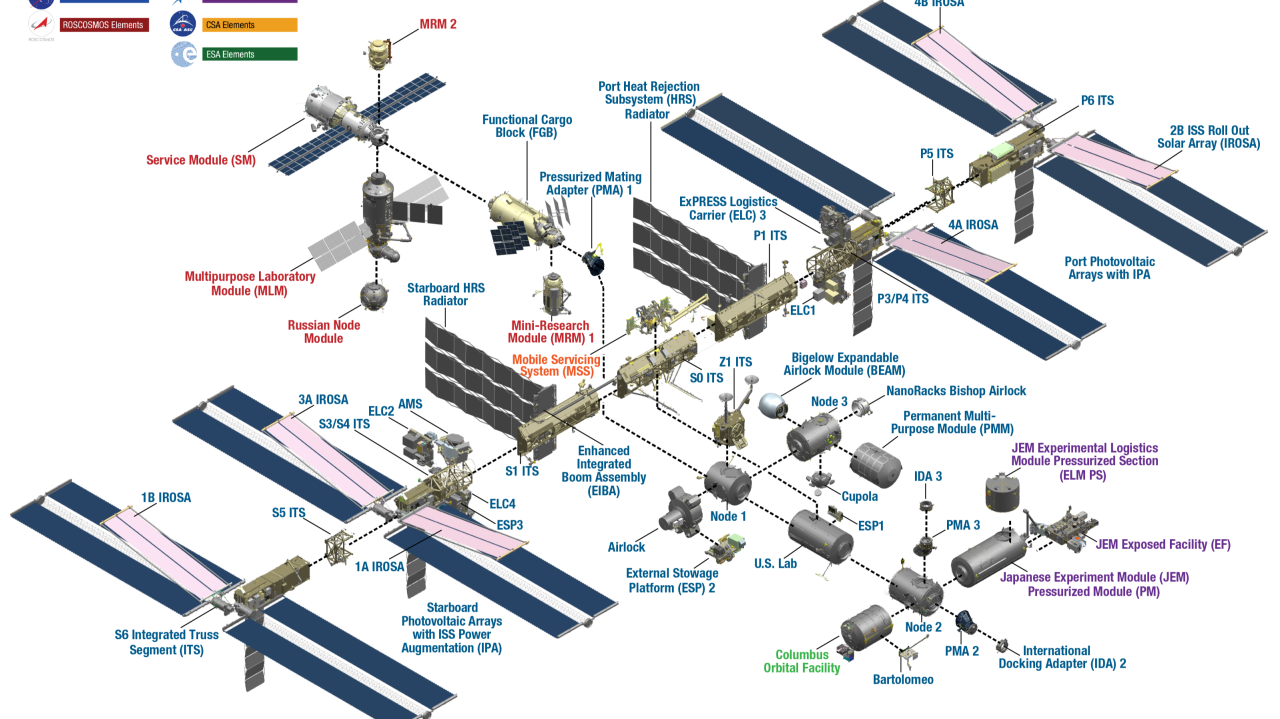
NASA: Drawing of the International Space Station with all of the elements labelled.
March 6, 2026
Dr Rowena Christiansen and the ad astra vita project – Space Policy Explainer Series
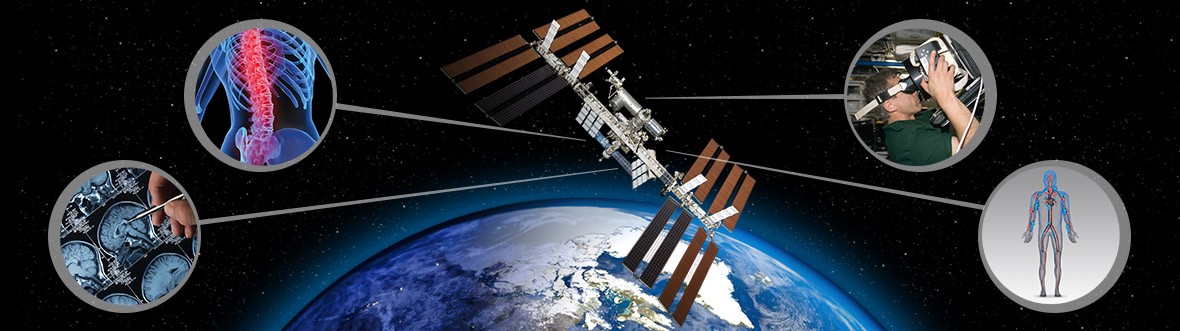
Image credit: Canadian Space Agency – Why do we conduct science experiments in space?
The International Space Station (ISS) is often described as humanity’s most advanced laboratory in space. Orbiting about 400 km above Earth, it enables research that cannot be performed under normal gravity conditions.
But what many people don’t realise is just how complex it is to get a scientific experiment there.
Sending research to the ISS is not as simple as packing equipment onto a rocket. It typically involves years of planning, international collaboration, rigorous safety testing, and significant financial investment.
Here is a simplified look at how the process usually works.
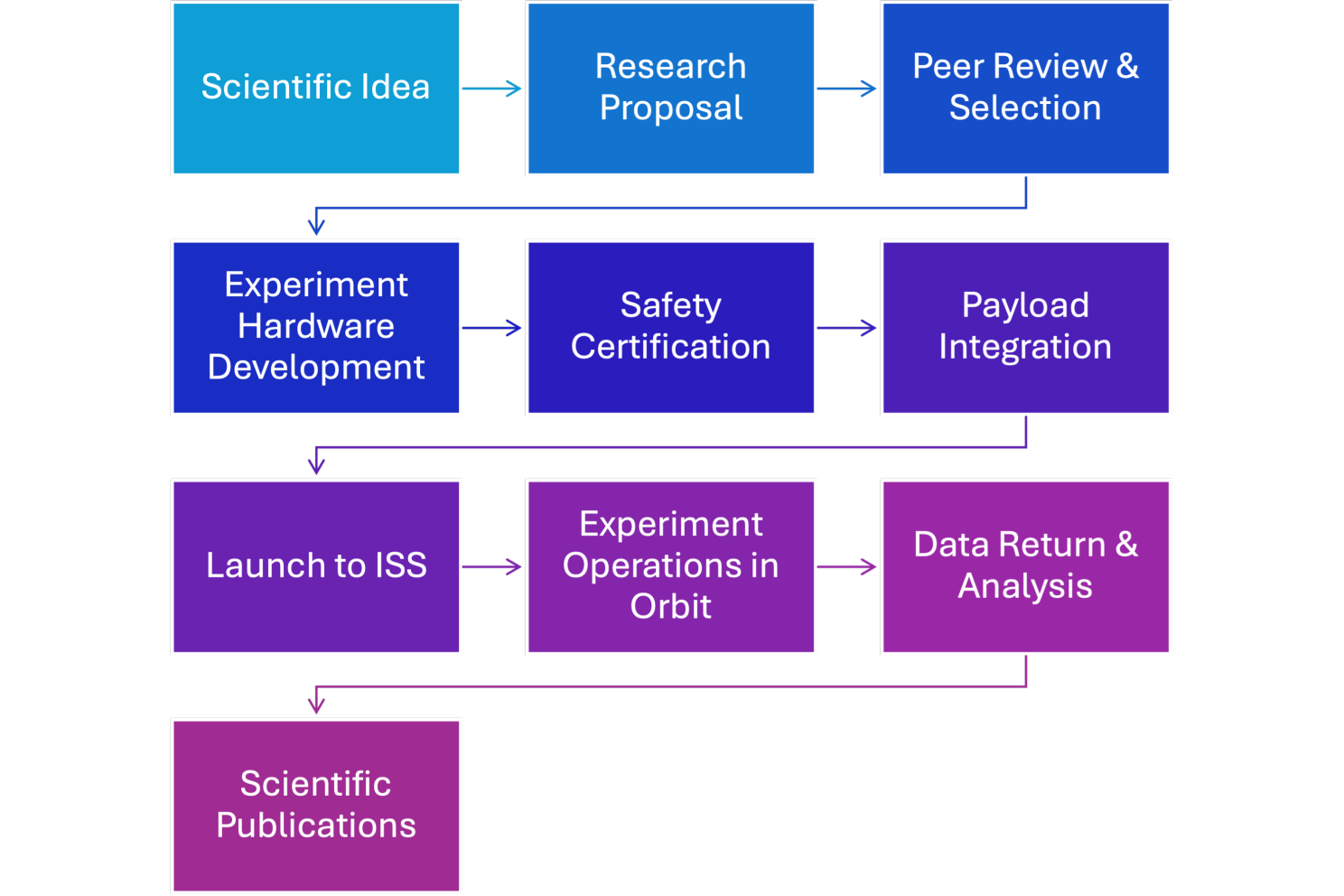
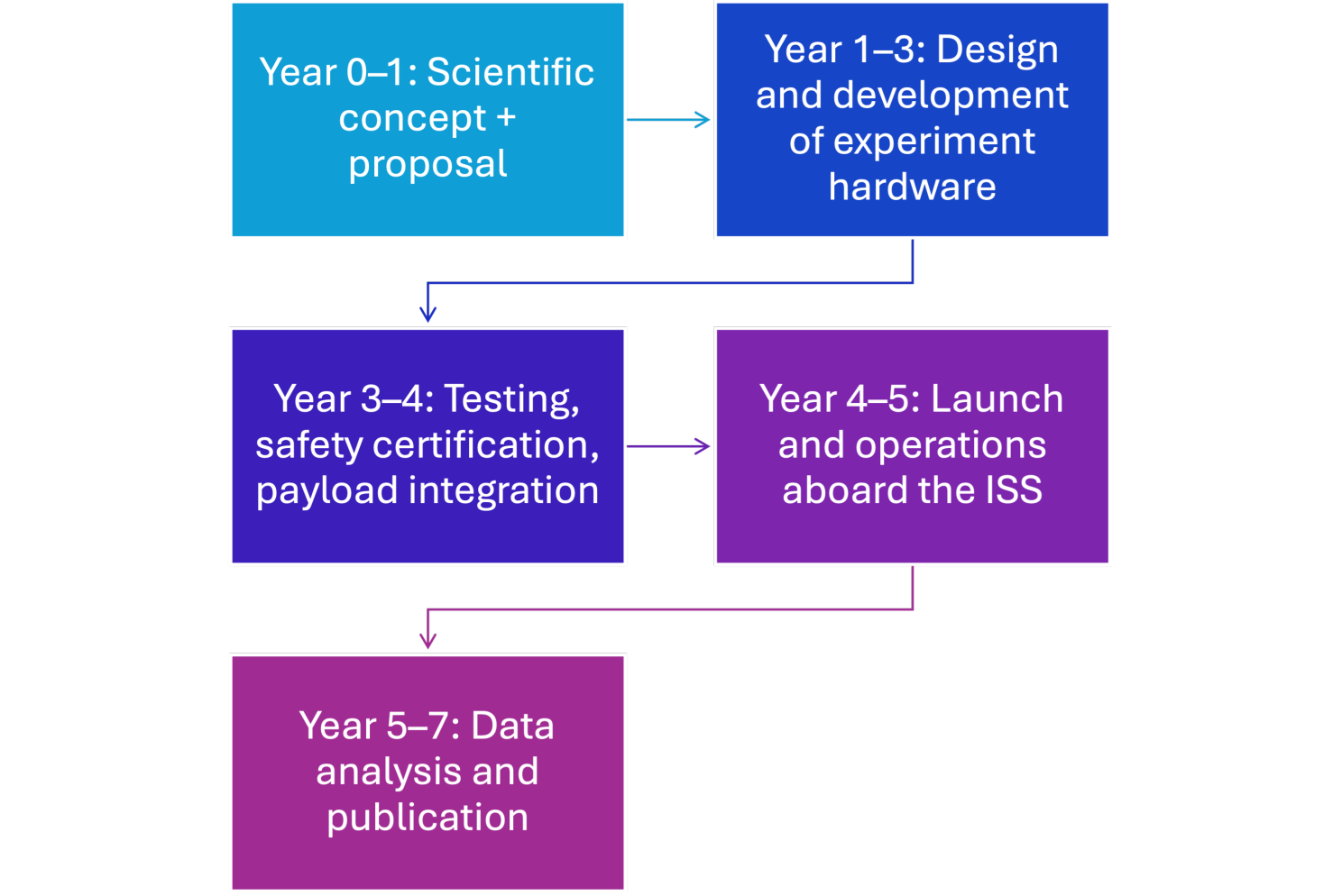
Diagram 1 – Typical Pathway for an ISS Research Experiment
1. The research idea
Everything begins with a scientific question. Researchers may want to study how microgravity affects biological systems, materials, fluid dynamics, combustion processes, or human physiology.
Microgravity can reveal phenomena that are hidden on Earth. For example, without gravity-driven convection or sedimentation, researchers can observe physical and biological processes in new ways.
2. Proposal and selection
Scientists typically submit research proposals through national space agencies or partner organisations involved in the ISS program.
The station itself is operated by an international partnership including NASA, the European Space Agency (ESA), the Japan Aerospace Exploration Agency (JAXA), the Canadian Space Agency (CSA), and Roscosmos.
Proposals usually undergo several layers of review, including:
· scientific merit
· feasibility in the space environment
· safety for astronauts and spacecraft systems
· engineering compatibility with the ISS.
Competition can be intense, and many proposals do not progress beyond the review stage.
3. Engineering the experiment
Once selected, the real work begins.
Experiments must be redesigned to operate safely in space. This often requires developing specialised hardware capable of withstanding:
· launch vibration and acceleration
· strict fire safety requirements
· microgravity fluid behaviour
· limited power and data availability
· restricted astronaut interaction time.
Developing flight-qualified hardware can take several years.
4. Payload integration and testing
Before launch, the experiment must be integrated into a payload system compatible with spacecraft carrying cargo to the ISS.
This involves extensive testing to ensure the equipment will function properly during launch, in orbit, and during astronaut operations.
Even small experiments must meet strict certification requirements before they can fly.
5. Launch to orbit
ISS experiments are typically launched aboard cargo spacecraft such as SpaceX Dragon or Northrop Grumman’s Cygnus vehicle.
These spacecraft deliver food, equipment, spare parts, and scientific payloads to the station.
Launch schedules are tightly managed, and payload space is limited, meaning experiments may wait months or years for flight opportunities.
6. Operations in space
Once aboard the ISS, astronauts may install, monitor, or operate the experiment.
Crew time is one of the most valuable resources on the station, so experiments must be carefully designed to minimise operational demands.
Some experiments run autonomously, while others require direct astronaut involvement.
7. Data return and analysis
After the experiment runs in orbit, the data are transmitted to Earth or returned on cargo spacecraft.
Researchers may spend years analysing the results and publishing their findings.
From idea to completed experiment, the entire process can easily take five to ten years.
Diagram 2 – Typical Timeline for Space Station Research
8. What does it cost?
Costs vary widely depending on the complexity of the experiment.
Typical research payloads can range from hundreds of thousands of dollars to several million dollars. Launch costs to low Earth orbit alone are often estimated at thousands of dollars per kilogram, and developing flight-qualified hardware adds further expense.
For this reason, space experiments usually involve collaborations between universities, industry, and government agencies.
9. Why do it at all?
Despite the challenges, research conducted aboard the ISS has contributed to advances in areas including protein crystallisation, materials science, fluid physics, and biomedical research.
The station provides a unique environment that cannot be replicated on Earth, making it a valuable platform for scientific discovery.
Understanding how these experiments are developed and flown helps illustrate the scale of effort required to conduct research in space—and the remarkable level of international cooperation that makes it possible.
Part of the Space Policy Explainer Series
Prepared by Dr Rowena Christiansen (with the assistance of OpenAI’s ChatGPT for background research).
There are three exciting events to choose from – a three-day Microgravity Workshop at La Trobe University (small cost involved, student discount), the “Life in Space Symposium (also at La Trobe, free), and the Austronaut Human Performance for Space workshop at Swinburne University of Technology (cost involved, student discount available).
Many thanks to our special guest authors: Krishi Korrapati and Cooper Lytle.
Krishi Korrapati
Krishi is a second year medical student at Chicago Medical School at Rosalind Franklin University. During the night, he dreams of poetry as politics and interstellar exploration one day alleviating inequity on earth. During the day, he is training for an Ironman, interpreting Spanish, doing theater, and trying to learn how to fly a plane. He likes to gild everything with lightheartedness and with gravity.
Cooper Lytle
Cooper is a second year medical student at Chicago Medical School at Rosalind Franklin University. He is an aspiring bread maker and maple syrup connoisseur, who enjoys seeing his house plants grow and spending long days at art museums with his wife.
Spaceflight is known to challenge the human body in many different ways, with some potential outcomes including burns, sterility, cancer, immune dysregulation, and hormonal changes. Although these maladaptive changes are well-documented, surprisingly, good things can happen as well. In this post we will discuss ways in which the stressors of space travel can induce a resilient hormetic* response in the human body through mechanisms of cross-adaptation and even prime pathways of wound healing.
Firstly, cross-adaptation is the process by which exposure to a stressor elicits an adaptation that can be advantageous when exposed to a subsequent stressor. Simultaneous exposures to multiple stressors can lead to synergistic* adaptations (or maladaptations) as well; this is termed ‘combined adaptation’. This latter model is more realistic to the environment of space because the body forms responses to hypoxia (reduced oxygen), heat, cold, microgravity, hyperbaria (increased pressure), hypobaria (decreased pressure), and fasting all at once, not in isolation (Ashely et al., 2024). These physiological pathways can be seen as a mode of resilience in extreme space settings.
One example of cross-adaptation is that heat acclimation boosts tolerance to hypoxia and enhances exercise performance in temperate conditions later on. In a single bout of acute exercise such as downhill running, heat shock proteins* (HSP) 72 and 90α will be produced in muscles and leukocytes (white blood cells), which primes an individual for further exercise. What does it mean to be primed to further exercise? Damage on a cellular level is decreased and this manifests as better performance. Very interestingly, HSPs were found to be upregulated not only after exposure to heat but also to cold (Matz et al., 1995), stress, and UV ionizing light (Cao et al., 1999).
The mechanism is as follows: heat stress prevents folding of outer membrane proteins which is bad; think wrinkly and stiff. These proteins accumulate in the space around the cell. Another protein in the cell (specifically an inner membrane protease) called DegS detects these abnormal proteins and cooperates with the sigmaE transcription factor (a transcription factor helps make the precursors to proteins). Together these intracellular molecules trigger the production of HSPs. Raw cellular damage and abnormal proteins can also elicit HSPs by parallel pathways (Hu et al., 2022). Normally, HSPs function as chaperone proteins* that maintain correct folding and stop aggregation. So it is thought that HSP production reduces the damage to cells by folding and managing these irregularly folded and accumulated proteins.
Other examples of cross-adaptations include cold preparing the body for hypoxia and nutritional deprivation potentiating metabolic efficiency. Cold environments release HSPs and force vasodilation (dilation of blood vessels). These HSPs ultimately re-establish normal protein-protein interactions and proper folding, especially those that are unstable and stressed. In cases of nutritional deprivation, there is a loss of metabolically active tissue but also the basal metabolic rate (energy burned at rest) of each unit cell mass decreases as a compensation. This translates to efficiently managing energy stores and reducing cell damage to stress later on. The mechanisms, though unclear, overlap: induction of HSPs, increased coupling of ATP* production to substrate oxidation*, and reduction in protein turnover and sodium/potassium ATPase (Emery et al., 2005). This information should be conveyed with great sensitivity for those who have experienced eating and exercise disorders.
We now can see that HSPs seem to be the key to cross-adaptation. More noteworthy is that HSPs have an integral role in wound healing too (Li et al., 2016). In zebrafish models, the injection of extraneous HSP60 proteins specifically contributes to the critical regeneration of hair cells and amputated fins. At the site of injury, HSPD1 was found to be deficient in leukocytes that infiltrated the injury site. Likewise HSP60 topically applied in diabetic mouse skin accelerated wound healing compared with controls. Although a chaperone protein intracellularly, HSP60 functions extracellularly in injury inflammation and tissue regeneration, most likely by facilitating the M2 or anti-inflammatory phase of macrophages*. These results were corroborated in human patients with diabetes mellitus too: increased levels of HSPs 70 and 27 promoted wound healing in foot ulcers by recruiting fibroblasts* to the injury site and initiating protein homeostasis compared to controls (although an increase was associated with more infection). Naturally, we can combine this data to postulate that controlled physiological stressors that induce the transcription of heat shock proteins can be used to prime astronauts and space travellers for improved wound healing. In a combined adaptation setting, perhaps a stressor can be induced immediately after an injury too, to facilitate its healing using the mechanisms of HSPs (Singh, 2015). Controlled stress→ HSPs→ Cross-adaptation→ Better wound healing.
We concede that the changes will be different depending on the individual and a constellation of personal factors such as their fitness, socioeconomic considerations, genetic predispositions, and motivation. Moreover what is considered “healthy” or “beneficial” in one setting will not necessarily be fruitful in another, the simplest example being heat or cold acclimatization being rendered useless when in the other temperature extreme. There is also impaired adaptation from some combinations of stressors e.g. heat and hypoxia together decreasing heat adaptation later on (McCleave et al., 2018). More research is needed on the specific numbers of heat shock proteins (because there are many) and their crossover from being upregulated in specific settings to their applicability in others, especially in wound healing. How else can HSPs be induced? What is their timescale? How will this influence pre-flight training regiments? Besides opening room for more inquiry, this paper demonstrates the anti-fragility of humans in the context of space exploration. We ask the question not of how space travel can devastate the human body but how space travel can further unveil its capacity, not unlike elite and extreme athletes in the most remote corners of the world- the closest beings we have to superhumans.
Questions? Let us know for the next post!
*Definitions
Adenosine triphosphate (ATP) is an energy-carrying molecule known as “the energy currency of life” or “the fuel of life,” because it’s the universal energy source for all living cells. Every living organism consists of cells that rely on ATP for their energy needs. ATP is made by converting the food we eat into energy. It’s an essential building block for all life forms. Without ATP, cells wouldn’t have the fuel or power to perform functions necessary to stay alive, and they would eventually die. All forms of life rely on ATP to do the things they must do to survive (https://www.verywellhealth.com/atp-6374347 – accessed 06 September 2024).
Heat shock proteins (HSPs) are a diverse group of proteins that are expressed under normal physiological conditions to perform a range of housekeeping functions that maintain regular cell metabolism. Under conditions of stress, the expression of these proteins is rapidly upregulated to protect the cell from various kinds of damage (https://www.sciencedirect.com/topics/biochemistry-genetics-and-molecular-biology/heat-shock-protein – accessed 06 September 2024).
Oxidation is a chemical reaction that takes place when a substance comes into contact with oxygen or another oxidizing substance. Examples of oxidation are rust and the brown color on a cut apple (https://www.cancer.gov/publications/dictionaries/cancer-terms/def/oxidation – accessed 06 September 2024).
Synergy means that the combined power of a group of things when they are working together that is greater than the total power achieved by each working separately (https://dictionary.cambridge.org/dictionary/english/synergy – accessed 06 September 2024).
References
Ashley G.B. Willmott, Diment AG, Chung HC, et al. Cross-adaptation from heat stress to hypoxia: A systematic review and exploratory meta-analysis. Journal of thermal biology. 2024;120:103793-103793. doi:https://doi.org/10.1016/j.jtherbio.2024.103793
Cao, Y., Ohwatari, N., Matsumoto, T. et al. TGF-β1 mediates 70-kDa heat shock protein induction due to ultraviolet irradiation in human skin fibroblasts. Pflügers Arch 438, 239–244 (1999). https://doi.org/10.1007/s004240050905
Hu C, Yang J, Qi Z, et al. Heat shock proteins: Biological functions, pathological roles, and therapeutic opportunities. MedComm. 2022;3(3). doi:https://doi.org/10.1002/mco2.161
Kanhaiya Singh, Neeraj K. Agrawal, Sanjeev K. Gupta, Gyanendra Mohan, Sunanda Chaturvedi, Kiran Singh, Decreased expression of heat shock proteins may lead to compromised wound healing in type 2 diabetes mellitus patients, Journal of Diabetes and its Complications, Volume 29, Issue 4, 2015, Pages 578-588, ISSN 1056-8727,
Lee BJ, Gibson OR, Thake CD, Tipton M, Hawley JA, Cotter JD. Editorial: Cross Adaptation and Cross Tolerance in Human Health and Disease. Frontiers in Physiology. 2019;9. doi:https://doi.org/10.3389/fphys.2018.01827
Li M, Tanaka K, Liu B, et al. Extracellular HSP60 triggers tissue regeneration and wound healing by regulating inflammation and cell proliferation. 2016;1(1). doi:https://doi.org/10.1038/npjregenmed.2016.13
Matz JM, Blake MJ, Tatelman HM, Lavoi KP, Holbrook NJ. Characterization and regulation of cold-induced heat shock protein expression in mouse brown adipose tissue. American Journal of Physiology-Regulatory, Integrative and Comparative Physiology. 1995;269(1):R38-R47. doi:https://doi.org/10.1152/ajpregu.1995.269.1.r38
McCleave et al., 2018. E.L. McCleave, K.M. Slattery, R. Duffield, P.U. Saunders, A.P. Sharma, S. Crowcroft, A.J. Coutts. Impaired heat adaptation from combined heat training and live high-train low hypoxia. Int. J. Sports Physiol. Perform., 14 (2018), pp. 1-24, 10.1123/ijspp.2018-0399
Many thanks to our special guest authors: Krishi Korrapati and Cooper Lytle.
Krishi Korrapati
Krishi is a second year medical student at Chicago Medical School at Rosalind Franklin University. During the night, he dreams of poetry as politics and interstellar exploration one day alleviating inequity on earth. During the day, he is training for an Ironman, interpreting Spanish, doing theater, and trying to learn how to fly a plane. He likes to gild everything with lightheartedness and with gravity.
Cooper Lytle
Cooper is a second year medical student at Chicago Medical School at Rosalind Franklin University. He is an aspiring bread maker and maple syrup connoisseur, who enjoys seeing his house plants grow and spending long days at art museums with his wife.
As humanity sets its sights further into space, space organizations are seeking to improve the medical capabilities of their vessels. NASA has created a set of levels of care for space exploration missions in order to establish a standardized model of care depending on the level of risk. The levels 1-5 range from basic first aid to basic surgical procedures (1). The medical needs of the crew, as well as the specific hurdles to providing that care, will continue to evolve as space programs aim to go from space stations, to space bases, to longer voyages to Mars or beyond. While planning for future medical needs there are many lessons that can be learned right here on Earth by examining how medicine is practised in extreme or isolated conditions. Analogs such as submarines, Antarctic or underwater research bases, combat prehospital practices, and wilderness environments provide many lessons that can be applied to the medicine practised in space. Though this is not intended to be a comprehensive analysis, we hope that they will help to illustrate the value in studying these analogs.
Antarctic research bases are a valuable analog because of its isolated circumstances and extreme climate. Antarctica boasts one of the coldest and windiest climates on Earth, is shrouded in darkness for half the year, and its bases are hundreds of miles away from the nearest source of help (2). Another example of isolation that can be compared to space is that of submarines. Like a space vessel, submarine crews are isolated from others for an extended period of time in an enclosed capsule. From these examples lessons can be learned about how to provide medical treatment to isolated populations. Both the research bases and submarines judge that the best method is to have medical personnel on hand.
For the Antarctic research bases, different countries have different strategies for the types of doctors they send, with some favoring surgeons over generalists and vice versa. For the countries who do not prioritize sending surgeons, they provide basic surgical and dental training. These doctors are relied upon to treat the medical needs of the populations. When situations arise where the doctor is asked to do something outside of their training they use telemedicine to either walk them through a procedure or to provide diagnostic aid. If the needs of the patient cannot be met at the site then an evacuation is called in (3).
On submarines, Independent Duty Corpsmen (trained for 16 months at the Naval Undersea Medical Institute) take care of the primary care needs of the corpsmen and stabilize patients when needed. When needed a doctor on land can be consulted and if necessary a medevac can be requested. However, due to the sensitive nature of submarines’ missions it may not always be possible to immediately call for guidance or request an evacuation (4).
Much like Antarctica and submarines, evacuation from space may not always be immediately possible. One solution to minimize these events is already being used by both Antarctica and submarines: telemedicine. At both of these locations, doctors or medical personnel are able to receive guidance in diagnosis and treatment, or in extreme cases being taught how to do a needed procedure. In a dramatic example from 1961, through radiotelegram, a neurosurgeon in Melbourne was able to guide the doctor at an Antarctic research station successfully through an emergency craniotomy to treat a ruptured intracranial aneurysm (2). The military has also used telemedicine to decrease the number of evacuations. In an analysis of MEDEVAC from Iraq and Syria before and after the implementation of asynchronous teleconsultation, both surgical and non-surgical evacuations decreased significantly (5). This correlation is also shown in a 2004 study when teleconsultation was used by soldiers in Iraq, Kuwait, and Afghanistan (6). If this trend could be applied to space it would be a promising sign that telemedicine could diminish the frequency that a space station or base would have to attempt evacuation back to Earth. The fact that it was asynchronous is even more compelling, because the farther away from Earth an expedition travels, the more the delay in communication would be. However as a voyage tests the limits of how far humanity can go, telemedicine’s efficacy will also be tested as it becomes extensively more asynchronous.
Submarines have an intriguing solution to this problem as well. Medical personnel could be aided in diagnosis and treatment by computer programs. These algorithms are also used to provide cognitive behavioral therapy as a mental health resource (4).
Aside from solving logistical challenges, analogs can provide insight into prevention and treatment of disease. For instance in order to qualify to be a researcher in Antarctica one must have a psychology test, dental exam, as well as a thorough physical examination that screens for chronic conditions such as diabetes, asthma, hypertension etc (1). On submarines, drinking water is frequently tested for bacterial contamination to limit chances of infection. In order to track radiation exposure, crew members wear dosimeters (4). With the increased radiation exposure in space, this precaution would be a useful aid to protect space travelers from exceeding dangerous levels. Medical treatment in wilderness settings provide treatment options that are effective in low resource environments, for example, the use of glue and surgical tape to close wounds, and using hemostatic dressings or agents to stop bleeding (7). In austere environments burns resuscitation can be achieved using oral resuscitation fluid with salt in place of intravenous fluids (8). This solution could be helpful in a microgravity environment.
Just as research bases and submarines differ in the medical resources and equipment based on their needs, so will space vessels or bases have to increase their capacity for treatment based on their expedition needs. As space exploration is advanced, the need for Earth-independent medical treatment will increase. While extreme injuries or illnesses at the analogs listed here ultimately end at a hospital, for space travel to expand, there will have to be a hospital-equivalent either onboard or nearby. For this to be a possibility, surgeries will have to take place in space. Although research is being done in this field, it is still some distance from being able to meet the needs of long term space travel or settlement (9). Although these analogs have this limitation, they remain valuable resources to help space agencies learn how to meet the demands of first response situations in extreme environments, one day serving as a model for in-house space surgery as well.
1. Hailey, Melinda, et al. Interpretation of NASA-STD-3001 levels of care for Exploration Medical System Development. No. JSC-CN-39515. 2017.
2. Taylor, David McD, and Peter J. Gormly. “Emergency medicine in Antarctica.” Emergency Medicine 9.3 (1997): 237-245.
3. Lecordier, Manon, et al. “Surgical training strategies for physicians practicing in an isolated environment: an example from Antarctica. International survey of 13 countries with active winter stations.” International Journal of Circumpolar Health 82.1 (2023): 2236761.
4. Beardslee, Luke A., Erica T. Casper, and Ben D. Lawson. “Submarine medicine: An overview of the unique challenges, medical concerns, and gaps.” Undersea & Hyperbaric Medicine 48.3 (2021).
5. Nguyen, Charles, Jennifer Mbuthia, and Craig P. Dobson. “Reduction in medical evacuations from Iraq and Syria following introduction of an asynchronous telehealth system.” Military medicine 185.9-10 (2020): e1693-e1699.
6. McManus, John, et al. “Teleconsultation program for deployed soldiers and healthcare professionals in remote and austere environments.” Prehospital and disaster medicine 23.3 (2008): 210-216.
7. Quinn, Robert H., et al. “Wilderness Medical Society practice guidelines for basic wound management in the austere environment.” Wilderness & environmental medicine 25.3 (2014): 295-310.
8. Peck, Michael, James Jeng, and Amr Moghazy. “Burn resuscitation in the austere environment.” Critical care clinics 32.4 (2016): 561-565.
9. Pantalone, Desiree. “Surgery in the Next Space Missions.” Life 13.7 (2023): 1477.
We are very proud to have worked together with an amazing group of people to launch a week of space-based excitement in early December!
This year’s inaugural Melbourne International Space Festival (‘SpaceFest 2023‘) marks an exciting new collaboration between several leading Melbourne ‘space’ universities, international space agencies, and a number of other Australian organisations involved with space and STEAM education initiatives.
SpaceFest 2023 will include a wide variety of events over the week from Monday 04 December to Sunday 10 December. While most events will be held in-person at La Trobe University and Swinburne University of Technology in Melbourne, there will also be a concluding fully virtual International Humans in Space Summit. Several events will be open to the public, whilst others will focus on students, industry, and academia.
The listing of events appears on the web page, together with key details about who can attend, any cost involved, and how to register and find out more information. Links are provided for events that have their own registration page or website.
Did you know that the ad astra vita project has its own YouTube channel? There are several playlists with a diverse collection of videos related to space health/medicine and extreme environments. Today we would like to feature our ‘Meet an Expert’ playlist, which contains the local and international guest speaker sessions for the “Human health in the space environment” subject for medical students at the University of Melbourne. All videos from 2022 and 2023 are included. We are very grateful to all the amazing speakers for sharing their time and insights with us 😊.
The YouTube channel and all the ‘Meet an Expert’ talks are ‘open access’, and freely available as a form of aerospace medicine education and outreach. Feel free to share with anyone who might be curious to know more about this exciting discipline.
The playlist, and our latest video, is linked below.
ARC Victoria has a conference coming up in September, and we would like to spread the word about this event. The one-day conference is run every couple of years with the aim of the net proceeds going towards the generous research grants that ARC provides to further the cause of resuscitation science.
May 2023 has been an extraordinary month when all the stars aligned, and wonderful things have happened in recognition of our work in aerospace medicine, and space health in particular.
This includes being a finalist in the Australian Space Awards for the fourth year, taking out the “Innovator of the Year” award, a well-received presentation at the Aerospace Medical Association (AsMA) Annual Scientific Meeting in New Orleans, together with a further award from the Aerospace Physiology Society, and election as an AsMA Vice-President, thought to be the first Australian to hold such a role in the Executive Committee.
To read more about these and other recent developments, visit “Our Recent Activities” on the ad astra vita project website.
UNICEF Ukraine Emergency Appeal – please consider a donation to assist the Ukrainian children and families affected by the Nova Kakhovka dam disaster.
The ad astra vita project has been proud to stand with the people of Ukraine since the beginning of the current conflict, and over recent days we have been deeply saddened to hear of the humanitarian and environmental catastrophe resulting from the failure and breach of the Nova Kakhovka dam in southern Ukraine. Tens of thousands of people have been displaced without access to food, clean drinking water, or sanitation, and the World Health Organisation has identified an imminent risk of diseases such as cholera from contaminated and toxic waters. Australians are no stranger to flooding, and the consequences and risks that this brings, and it is not difficult to imagine just how devastating this disaster is for the people of Ukraine.
Late last year, as part of our collaboration on the International Humans in Space Summit 2022, we established a fundraising page for the UNICEF Ukraine Emergency Appeal. All funds raised go directly to UNICEF to support its work assisting families in Ukraine. With the collapse of the dam, the need for financial assistance and the provision of basic supplies such as drinking water is even more urgent. Especially with the end of the financial year coming up soon, please consider making a tax-deductible donation to the UNICEF appeal: https://ukraine.unicef.org.au/t/ihs2022. Thank you 😊.









 the ad astra vita project