
Our Mission

At the International Space Surgery Research Consortium (ISSRC), we are pioneering the future of surgical innovation in space. As humanity prepares to go back to the Moon to stay, and onto Mars, and beyond, the ability to perform safe, effective, and autonomous surgical procedures in microgravity and resource-limited environments is critical. Our mission is to bridge the gap between terrestrial surgical expertise and the unique challenges for human health and wellbeing in space, ensuring that future astronauts have access to life-saving interventions, no matter how far from Earth they travel. We believe that the challenges of spaceflight push the boundaries of human innovation, and that our work will not only shape the future of space surgery, but also revolutionise emergency and trauma care in extreme environments worldwide.
Current projects
1 – Wound-Healing and Onboard Care During Long-Duration Human Deep Space Exploration from a Surgical Perspective through the lens of a scoping review (published).
2 – Navigating Vascular Emergencies in Human Deep Space Exploration: A Review of the Significance of Vascular Surgery and Advanced Endovascular Therapy Insights (review in progress).
3 – Traditional Surgical Methods and Cutting-Edge Techniques: Pioneering Endovascular Surgery in Long-Duration Human Space Exploration (in data collection phase).
4 – Effects of the Space Environment on Critical Mission Tasks: Evaluating Procedural Performance during Deep-Space Missions (review in progress).
5 – Pioneering Space Surgeons: Matching Skills to Mission Needs – Determining the Essential Surgical Expertise for Mars Missions (review in progress).
6 – PhD project: Bridging Earth and Space: Clinical Expertise from High-Volume Aortic Centers with Complex Endovascular Cases and Implementation of Vascular Surgery Techniques in Extreme Environments – Translating Terrestrial Expertise to the Final Frontier.
7 – The current state of knowledge regarding the development,
risk factors, vascular surgical implications and management strategies for atherosclerosis in
spaceflight environments (review in progress).
8 – Rehabilitation as part of the perioperative journey in space (in early development).
9 – Perioperative care of the space surgical patient as a holistic concept – exploring an integrated system of care for the “before”, “during”, and “after” of the patient journey. (Presentation given, paper in preparation, proposed ongoing project.)
Our Team Leaders

Dr Dora Babocs, MD, PGD
Dr. Dora Babocs is a visionary medical doctor with an aim to make surgical procedures a safe option for future deep-space missions. Currently serving as a Postdoctoral Research Fellow at Baylor College of Medicine’s Advanced Aortic Research Program, her journey into the realms of medicine and space exploration began in Szeged, Hungary, where she embarked on a career as a General Surgery resident. Driven by a profound curiosity about the cosmos, she is concurrently pursuing a Bachelor’s degree in Astronomy and Planetary Science, recently graduated as a Space Specialist in Life Sciences, and participated in ESA’s Space Physician Training 2023. Dr. Babocs also plays an integral role in the Biomedical Engineering Group at OeWF, contributing her expertise to Mars analog missions. Additionally, she serves as a European Representative of the International Outreach Committee for AMSRO, and serves as National Point of Contact for Hungary at SGAC, fostering international collaboration in space exploration. Dr. Babocs was also selected for the Forbes 30/30, and Forbes x Johnnie Walker Selfmade lists in 2024. Through her pioneering vision and tireless scientific endeavors, Dr. Babocs is dedicated to overcoming the challenges of surgery in deep space, paving the way for future human exploration beyond the confines of our planet.
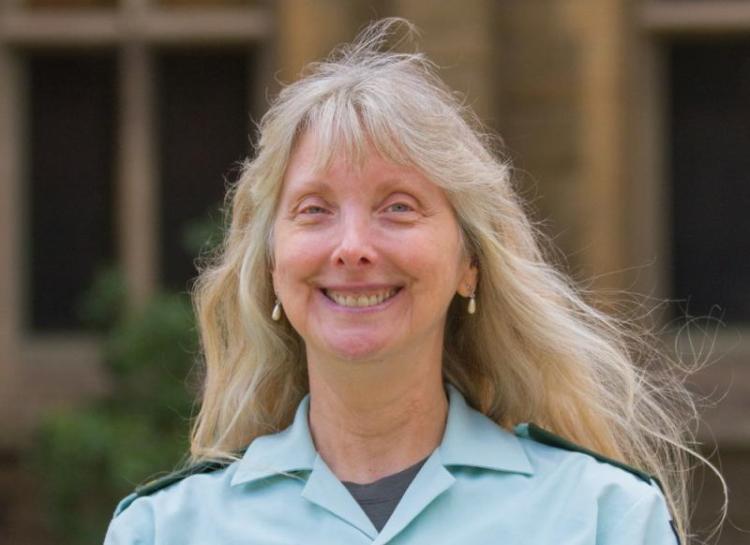
Dr Rowena Christiansen, MEmergHealth, MBA, MBBS, BA Hons, LLB, DCH, GradDipDisasterMed, GradDipEd, ACCAM, GradCertSpaceStudies, ISU SHSSP16, FAsMA, FAsHFA
Dr Rowena Christiansen is dual-qualified in medicine and law, with post-graduate studies in emergency health, aerospace medicine, space studies, disaster management, anaesthetics, and child health. She also holds qualifications in business, humanities and education. Rowena primarily practises in medicine in extreme and austere environments and pre-hospital emergency care. She is a Fellow of the Aerospace Medical Association (AsMA), the Aerospace Human Factors Association, and of Ormond College at the University of Melbourne. Rowena is the author and coordinator of a new subject on “Human health in the space environment” for the Melbourne Medical School, and lectures on ‘humans in space‘ for Swinburne University of Technology. She is a passionate aerospace medicine advocate, educator, researcher, and editor/reviewer, embracing the importance of international collaboration and networking. Rowena volunteers in support of diverse professional organisations, and is the first Australian Vice-President of the Aerospace Medical Association (AsMA) and the Organisation for Space Medicine, Engineering, and Design. She is a founding member of the Space Surgery Association, and the current Parliamentarian. In late 2019, she founded the “ad astra vita” project, focusing on space health and medicine in austere and extreme environments, and is a co-founder of the International Humans in Space Summit and the Melbourne International Space Festival. Rowena is a six-year finalist in the Australian Space Awards, receiving the 2023 “Innovator of the Year” award, and has also received several aerospace medicine awards.
Leadership Team
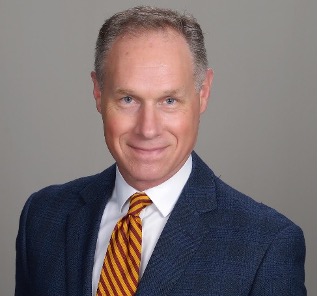
Dr M. Mark Melin, MD
Senior Mentor
M. Mark Melin MD FACS RPVI FACWS is the Medical Director of the Wound Clinic, Gonda Vascular Center, Mayo Clinic, Rochester, Minnesota, USA. His interests include dermal lymphatic therapeutics and research, adjunctive micronutrients including Diosmin Hesperidin, and biofilm mitigation in wound care. He has participated in research, publications and education in aerospace medicine and is the Treasurer for the Space Surgery Association.
Krishi Korrapati, BA
Chief Research Fellow
Krishi is a second year medical student at Chicago Medical School at Rosalind Franklin University. After graduating from Columbia University with a degree in neuroscience, economics, and philosophy, he hoped to bridge his restlessness for medicine and space, having faith that advancing the human condition will alleviate inequity on Earth. During the night, he dreams of poetry as politics and interstellar exploration. During the day, he is training for an Ironman, interpreting Spanish, doing theater, and trying to learn how to fly a plane. He likes to gild everything with lightheartedness and with gravity.

Dr Georgios Tzavellas, MD, MSc, RPVI, FACS, FSVS
Research Manager
Dr Georgios Tzavellas is a board-certified vascular and endovascular surgeon. He has trained and practiced in both Europe and the United States, including residency at Stony Brook Medicine in New York, and served as faculty at the Indiana University Health. He currently holds clinical appointments in both Greece and the U.S. In parallel with his clinical career, Dr. Tzavellas has cultivated a deep and evolving interest in space medicine and physics, particularly focusing on vascular pathophysiology in space.
Our Research Fellows
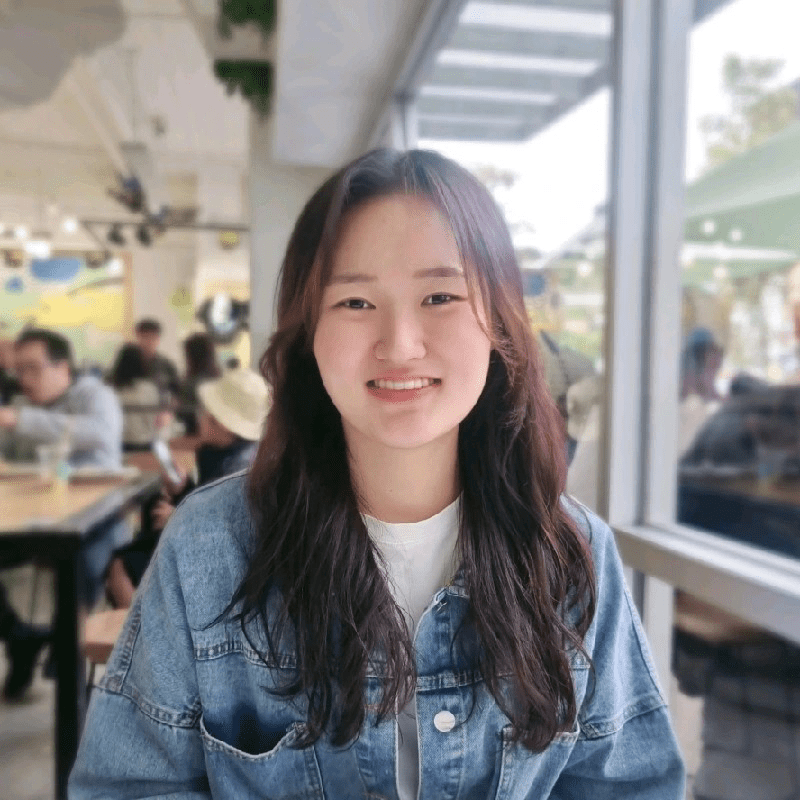
Dana (Daeun) Oh
Dana Oh is a final-year undergraduate medical student at Monash University, Australia.
Her passion for space and space surgery began in high school, where she won second place in the 2020 NSS Space Settlement Contest for designing a permanent spacecraft for human habitation. She has a strong interest in biotechnology and artificial intelligence, having completed an AI course at Monash University in 2024. Currently, she serves as a medical officer at the startup company Chyral. She is dedicated to advancing the field of space surgery and medical technology, believing that these innovations will push the boundaries of modern medicine.

Cooper Lytle, BA
Cooper is a second year medical student at Chicago Medical School at Rosalind Franklin University. He is an aspiring bread maker and maple syrup connoisseur, who enjoys seeing his house plants grow and spending long days at art museums with his wife.

Dr Hyun Yi (Jacqualine) Woo, MD, MPH (c)
Jacqualine Woo is a South Korean physician with a highly international background. Trained in Hungary, she has gained diverse clinical experience in the U.S., Italy, and South Korea. Currently, she is expanding her expertise by pursuing a Master of Public Health at the Johns Hopkins Bloomberg School of Public Health, concentrating in Epidemiology and Biostatistics, while earning certificates in Clinical Trials and Public Health Informatics.
Fascinated by space and medicine from an early age, Jacqualine is passionate about exploring the intersection of surgery, technology, and extreme environments. She actively seeks opportunities that push her beyond traditional medical practice, engaging in research, clinical work, public health informatics—leveraging her Python skills—health tech industry experiences, case competitions, and international collaborations. With a versatile skill set and a global perspective, she aims to bridge medicine, technology, and public health to drive meaningful impact.

Dr Luis Guilarte, MD
Luis is a dedicated and passionate Venezuelan medical doctor who graduated in 2019 with a goal to complete his residency in Cardiac Surgery. With a profound interest in neuroanatomy and neurophysiology, he initiated a tutoring course for medical students between 2014 and 2016, demonstrating his commitment to education of medical sciences early on. After graduation in 2019, Luis began his medical career as an emergency room doctor in Barcelona, Venezuela. His journey took a significant turn when he joined the University of Texas Cardiothoracic and Vascular Surgery Department as a Research Coordinator. In this role, he has been instrumental in advancing clinical trials related to aortic implantable devices, heart valve replacements, and follow-up studies on morbidity and mortality. Luis’s dedication to integrating AI into medicine is evident through his active involvement with the Lumen Foundation since 2021. He collaborates with the Forum of Artificial Intelligence in Medicine, contributing to their newsletter with insights on some of the most advanced AI-driven medical procedures. Beyond his professional endeavors, Luis is a Goethe-certified German language speaker since 2021 and a football fan, balancing his professional life with personal interests and hobbies. Luis’s story is one of relentless pursuit of knowledge, innovation, and a deep-seated commitment to improving medical outcomes through both traditional and cutting-edge methods.

Divy Kumar, MS
Divy is currently a second-year medical student at Northwestern University Feinberg School of Medicine. He earned his Bachelor of Science in Neuroscience and Integrated Sciences and a Master of Science in Computer Science from Northwestern University. As an undergraduate, he was part of the highly rigorous and selective Integrated Science Program, where he studied astrophysics, quantum mechanics, biology, and advanced mathematics—an experience that deepened his appreciation for interdisciplinary problem-solving and scientific exploration.
His research interests lie at the intersection of neurosurgery, aerospace medicine, and artificial intelligence. He is particularly focused on neurological and spinal complications in spaceflight, as well as AI-driven solutions such as autonomous robotic surgery for space missions. His work aims to address the challenges of delivering high-level surgical and neurological care in austere environments, ensuring astronauts remain safe during prolonged missions beyond Earth.
Divy’s fascination with space began during a trip to the Nevada desert, where he saw the Milky Way for the first time. Looking up at the vast expanse of stars, he was struck by how small we are in the universe. But rather than making life feel insignificant, it reinforced just how important medicine and human connection are—especially as we venture further into the unknown. As we travel through the emptiness of space together on our small blue rock, ensuring the health and well-being of one another becomes even more essential. This perspective continues to shape his passion for advancing medical care in extreme environments, both on Earth and beyond.

Adrian Ramirez, BS
Webmaster
Adrian is a dedicated research assistant in the Department of Cardiothoracic and Vascular Surgery at UTHealth Houston McGovern Medical School. He is also passionate about education, serving as a math instructor at the Mathnasium of Fulshear, where he teaches junior high and high school students.
Adrian earned his Bachelor of Science in Biomedical Sciences from Texas A&M University, where he cultivated his interests in human medicine, research, and education. With a commitment to academic excellence and innovation, he aspires to pursue a career in academic medicine, integrating clinical practice, scientific research, and teaching to make a meaningful impact in the field.
Asllan Abili, BBiomedSc, BParamed
Asllan is a registered paramedic and aspiring medical student with a deep passion for healthcare, particularly in extreme environments. Holding a Bachelor of Biomedical Science (2020) and a Bachelor of Paramedicine (2023) from Monash University, he has hands-on experience in emergency pre-hospital care. Currently a Research Assistant at the Turner Institute for Brain and Mental Health, he contributes to research examining the effects of shift work and challenging environments on work performance and physiology in frontline workers. Coupled with his certification as an advanced diver, his clinical experience and passion for healthcare in extreme settings drives his commitment to improving care for individuals in high-stress environments, ensuring virtually everyone has access to optimal care.
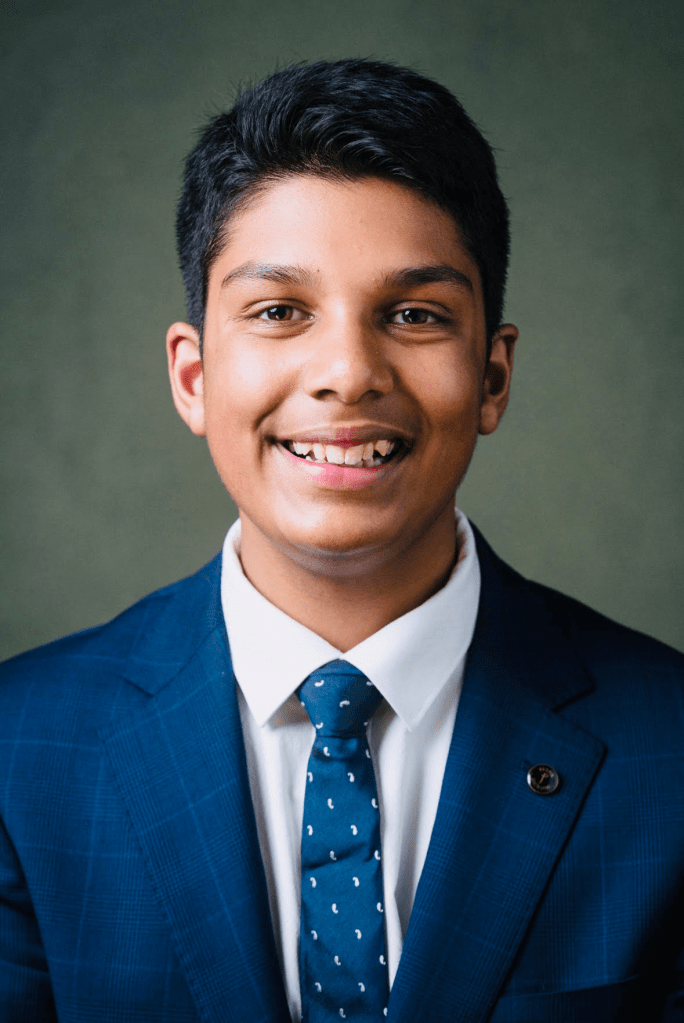
Anay Ashwin
Haileybury College/University of Southern Queensland, AustraliaAnay Ashwin is a high school student who is also undertaking a foundational unit in the Bachelor of Space Science. He has a keen interest in bioastronautics and aspires to become a flight surgeon, focusing on astronaut health and performance in space. Anay’s research began with studying the psychological impacts of isolation on sleep during COVID lockdowns, later expanding to the effects of isolation on sleep in long-duration space missions. He is now eager to broaden his knowledge and gain a comprehensive understanding of the challenges humans face in space, with a particular focus on space surgery. He is passionate about student outreach, interns with space organisations, and hosts a podcast exploring diverse space careers, championing the idea that “space is for all.”Outside of space, he juggles Latin and French studies. He plays classical and jazz guitar, enjoys the piano and choral singing, and never misses a chance to hit the cricket nets. An avid traveller, Petra, Jordan, tops his list.

Harini Thevarajah, BSc (Hons)
Harini is a Clinical Research Analyst at Princess Margaret Cancer Centre, supporting radiology and oncology trials, particularly MRI-guided therapies for prostate cancer. With over a decade of experience across pediatrics, surgical oncology, and medical imaging, her work bridges patient care with data-driven insights. She holds an Honours Bachelor of Science in Neuroscience and Human Biology from the University of Toronto. Harini’s curiosity about how the human body responds to extreme environments led her to space medicine, with a focus on neurophysiology and rehabilitation. Outside of research, she’s involved in podcast production and space health communication. She will be joining the International Space University’s Space Studies Program in France in 2026 and is excited to contribute to ISSRC and the future of surgical care beyond Earth.

Dr Preeti Sawant, MBBS
Curiosity-led science enthusiast exploring the human body through General Surgery. I strive to learn from inspiring and passionate mentors and craft my potential. I can efficiently adapt and improvise my skill sets to meet defined goals in diverse fields. I am passionate towards Global Surgery, Longevity Medicine, Space and Global Health and future driven initiatives. Willing to learn from and add value to the organisations I work with.

Natassha Naomi Shanmugam, BBiomedSc
Illustration and Design Team
Hello! My name is Natassha Naomi. I’m currently pursuing my Master’s in Space Studies at the International Space University in Strasbourg, France, where I’m blending my background in biomedical sciences with the wonders of outer space.
With a Bachelor’s degree from the University of Western Australia, I majored in Pathology, Immunology, and Microbiology – and it was during that time I stumbled upon the concept of Panspermia. That single spark launched me on a trajectory into the world of Astrobiology, where I became fascinated by how tiny microbes could hold answers to some of space’s biggest questions.
What truly captivated me was realizing that space wasn’t just about rockets and satellites — it’s also about humans, health, and life itself. From space medicine to bioregenerative closed-loop systems, I discovered that my knowledge in pathology and immunology could actually help pave the way for sustaining life beyond Earth. Now, through my Master’s, I’m diving deeper into the physiological challenges of human spaceflight and how we can develop innovative solutions to support human performance in extreme environments. I’m thrilled to be part of the International Space Surgery Research Collaborative (ISSRC) as I work towards turning these ideas into reality.

Aman Sandhu, BA
Aman is a third-year medical student at Drexel University College of Medicine. He completed his undergraduate degree in Biological Sciences at Rutgers University–New Brunswick. His interest in astronomy began in high school, where he used to organize stargazing nights at his school parking lot. He founded Drexel’s Astronomy and Space Medicine Club, which is now recognized as an official chapter of the Aerospace Medicine Student and Resident Organization. He has a strong interest in the dermatological effects of spaceflight and aims to raise awareness of these unique challenges within the broader medical community.

Lauren Puig, BSc
A licensed pilot with a passion for medicine, Lauren Puig brings a unique blend of sky-high ambition and medical expertise to the ad astra vita team. Currently pursuing her MD at Texas Tech Health Sciences Center, Lauren channels her enthusiasm for aerospace medicine as president of TTUHSC’s Aerospace Medicine Interest Group, where she plans events to bring aviation and aerospace to her peers. When not immersed in her medical studies or research projects, you’ll find Lauren sharing her love of flight by taking fellow med students up in the air, volunteering weekends at the Texas Air Museum, or shadowing all sorts of specialties. Her background in biophysics from Duke University, combined with hands-on clinical experience and genuine excitement for the future of aerospace medicine, makes Lauren a natural fit for the International Space Surgery Research Consortium.

Dr Zachary (Zack) Zajac, DO, MSc
Zack is a family medicine resident physician at Corewell Wayne hospital in Wayne, Michigan whose main academic passions include medicine, physics, and space. He obtained his undergraduate and Master’s degrees from University of Toronto in Biophysics and Medical Biophysics, where he spent time researching using ultrasound contrast agents to measure flow. Zack has always had a passion for space, completing a research project in planetary science which investigated whether the carbonate-silicate cycle is able to stabilize atmospheric conditions of an exoplanet which is heated by tidal forces.

Brett Berezowski, MSc, BSc(Hons)
Illustration and Design Team
Brett is a motivated final-year medical student at the University of Queensland. With a background in research, he is eager to apply his skills to advance knowledge in the field of aerospace medicine, with a particular interest in the physiological aspects of space medicine, including pre- and post-operative care and surgical management in space flight. Brett holds a Master of Science in Biochemistry, Microbiology, and Immunology from the University of Saskatchewan. After completion of his Doctor of Medicine degree in November 2025, Brett hopes to begin a family medicine residency in Canada with an emphasis on emergency medicine and soon after serve in the Canadian Armed Forces as a medical officer. His extracurricular activities include officiating ice hockey at both the local and national levels in Australia and training for the Brisbane half-marathon in June 2025.
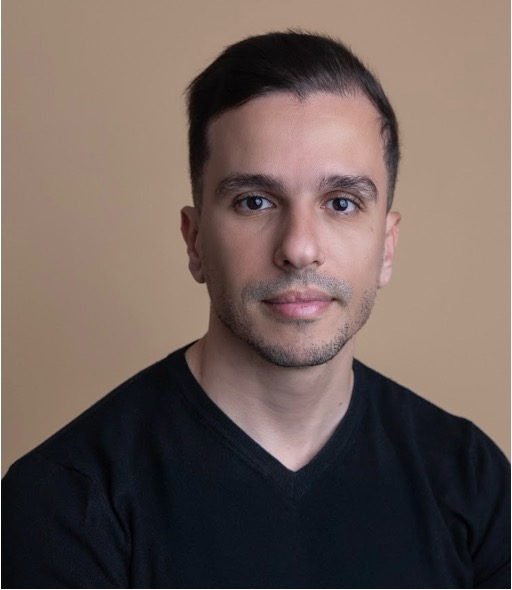
Dr Mourad Berrim, MD
Dr Mourad Berrim is an Algerian medical doctor and researcher with a background in physical medicine and rehabilitation, specializing in aerospace medicine. He has a strong interest in the physiological effects of microgravity and in developing rehabilitation strategies to support astronaut health during long-duration missions.
Passionate about human adaptation in extreme environments, Dr.Berrim is dedicated to exploring the intersection of clinical rehabilitation, space health, and innovation. He actively participates in international training programs and collaborative initiatives aimed at advancing medical preparedness for space exploration. His enthusiasm for innovation, cross-disciplinary collaboration, and progress reflects a vision to help shape the future of human health beyond Earth.

Dr Ian Dox, MD
Ian Dox is a former military medical officer with a decade of experience in the Mexican Army, where he performed emergency care and medical logistics during tactical operations. He holds a Bachelor’s degree as a MIlitary Medical Surgeon from Military Medical School and further expanded his expertise with a Master´s in Direction and Management of Health Institutions, as well as a specialization in Corporate Health and Well-being from Anahuac University in Mexico City. Currently, Ian is pursuing a Master of Space Studies at the International Space University in Strasbourg, France. Passionate about space medicine and exploration, he is committed to advancing research on human health in extreme and microgravity environments, aiming to contribute to the future of medicine beyond Earth.

Mónika Szűcs, MSc
Mónika Szűcs holds her MSc degree in Applied Mathematics from the University of Szeged, where she developed a strong interest in medical applications during her studies. Currently, she is working as an assistant lecturer at the Department of Medical Physics and Informatics at the University of Szeged.
Besides teaching informatics and statistics to medical and PhD students, as a biostatistician she collaborates with several medical research groups, mainly in the fields of clinical and physiological research. Her research interests also include medical applications of artificial intelligence, with a particular focus on the potential of data-based decision support in the field of space medicine.

Jonathan Szeto, BA
Jonathan is a medical student at the University of Pennsylvania, where he also attended as an undergraduate and earned degrees in Earth science and political science. He has a strong interest in the effects of space travel on cardiovascular health. His other research interests include environmental health and minimally invasive surgery. In his free time he trains for marathons and watches Star Wars.

Dr Jessica Urbano, MD
Jessica D’Urbano is an Italian Medical Doctor, currently studying Occupational Medicine at the University of Trieste. She is a Research Fellow of ASRI (Advanced SpaceLife Research Institute). Jessica is always looking for international collaborations to learn and exchange knowledge and backgrounds coming from different cultures. She’s the Communications Lead of NASA GeneLab ALSDA and Multi-Omics Analysis WorkingGroups, where researchers can explore GeneLab datasets in the data repository and create collaborative projects. Last year Jessica was selected as one of the members of NASA Space App Collective 2024-2025 Cohort. Together they’re learning how to use NASA data to advance its mission priorities and to make a difference both locally and globally. She is also an advisor of UNOOSA and WHO Space and Global Health Curriculum Taskforce. Jessica has recently been nominated a member of the International Astronautical Federation – Space Education and Outreach Committee.

Nabiha Asghar, BSc
Nabiha Asghar holds her BSc degree in Biotechnology and Sociology from Forman Christian College University, where she specialized in microbiology research. During her studies, she conducted her undergraduate thesis on biopriming suboptimal cotton and rice seeds under the supervision of Dr. Kauser Abdullah Malik, investigating how microbial interactions can enhance germination and resilience.Her interdisciplinary engagements strengthened her interest in applying microbiology across new frontiers. In particular, her independent exploration of the emerging field of space surgery sparked her fascination with the role of microbiology in sustaining human health in space, including infection control, immune stability, and wound healing in microgravity. Her research interests now focus on how microbiology can support medical innovation and contribute to human survival beyond Earth.

Dr Deepasree Bangaru-Raju, BMBS, MRCP (London), PgDip (Medical Toxicology)
Dr Deepasree Bangaru-Raju is a Visiting Research Fellow at the University of California, San Diego (UCSD), where she leads and collaborates on clinical and translational research in cardiovascular disease, heart transplantation, and advanced heart failure. She serves as principal investigator and co-investigator on multiple studies, including projects on left ventricular assist device (LVAD) outcomes, immunosuppressive risk, and arrhythmia management, with presentations at leading global conferences. As part of a multidisciplinary team, she also explores the use of artificial intelligence (AI) and machine learning to improve diagnostics, risk prediction, and clinical decision-making in heart failure.
With over 15 years of experience as a physician in acute and internal medicine in the UK, she brings a strong background in frontline care, diagnostic medicine, and simulation-based education. She is an active contributor to the field of space medicine, serving as the medical lead for analog missions, including the AMADEE-20 Mars mission and the World’s Biggest Analog mission. She has completed multiple missions as an analogue astronaut herself and serves as an editor of the Analog Astronaut Foundation Journal. She holds active roles with the Biomedical Engineering Group at the Austrian Space Forum (OeWF), Aerospace Medical Association (AsMA), and UK Space LABS, focusing on the integration of earth- and space-based healthcare.
Dr Bangaru-Raju’s research interests span toxicology, cardiovascular health, patient safety, human factors, and the use of simulation, telemedicine, and digital health tools in austere and resource-limited environments. Her future goals include advancing intelligent, self-sufficient healthcare systems for space exploration, expanding AI-powered diagnostics for isolated environments, and fostering international collaboration in space health research. She is also passionate about mentoring the next generation of clinicians and scientists, actively promoting STEM education through outreach and advocacy, with a strong emphasis on diversity and inclusion in space and science.

Nicolas Vassiliev, BS
Nick is a third year medical student at Rush Medical College in Chicago. Born and raised in Southern California, Nick sought to combine his love for the outdoors with his passion for medicine. In his journey to learn more about providing medical care in austere environments, he discovered the field of space medicine. Nick’s medical interests lie in critical care and emergency medicine beyond the hospital, but in his free time you can find him rock climbing, playing water polo, golfing, fencing, playing guitar, and reading.

Dr Dhivyashree Bangaru‑Raju, BMBS, MRCP UK (London), PgDip Medical Toxicology
Dr Dhivyashree Bangaru Raju is a British physician, researcher, and analog astronaut with a passion for bringing space and medicine closer together. Currently based at the University of California San Diego (UCSD) as a Visiting Research Scholar, she works on cutting-edge studies in advanced heart failure, transplant medicine, and patient-centred outcomes. With more than a decade of clinical experience in the UK, including as an Attending Physician and Educational Lead at Queen Alexandra Hospital, Portsmouth, her background blends frontline care with academic leadership. Her work spans a wide clinical spectrum, including geriatrics, cardiology, intensive care, respiratory medicine, and stroke medicine. As an educational lead for junior doctors, she is recognised for her leadership in clinical training, service improvement, and patient safety.
At UCSD, Dr Bangaru-Raju serves as Principal Investigator on multiple research initiatives focused on advanced heart failure and transplant medicine. Her current projects include evaluating psychosocial predictors of LVAD outcomes, analysing immunologic risks in transplant recipients, and genetic testing in cardiomyopathies. She is also part of a collaborative team applying machine learning and AI tools to improve diagnostic precision, clinical forecasting, and risk modelling in heart failure populations.
In the domain of space medicine, Dr Bangaru-Raju holds multiple leadership roles. She served as Medical Officer during a LunAres analog space mission in Poland, part of an all-female, multidisciplinary crew focused on space health, robotics, and EVA protocols. She currently serves as Medical Lead for a large-scale international analog mission, the World’s Biggest Analog, developing safety strategies and operational medical protocols across more than a dozen analog habitats worldwide. Her responsibilities span medical operations, crew safety, and simulation-based training in planetary analog environments. She is also an active contributor to space medicine through roles with the Aerospace Medical Association, particularly in cardiovascular adaptation and crew health during spaceflight. She is also editor of the Analog Astronaut Foundation Journal, promoting cross-sectoral research in space health sciences.
Her broader research portfolio includes cardiovascular science, transplant outcomes, and medical toxicology. She has presented at leading international conferences, including the International Society for Heart and Lung Transplantation (ISHLT), American College of Cardiology (ACC), Aerospace Medical Association (AsMA), and the International Astronautical Congress.
Through her work in education, research, and global analog missions, Dr Bangaru Raju is committed to supporting a safe, equitable, and sustainable future for human exploration beyond Earth—working toward a future where medical systems in space not only help astronauts but also strengthen healthcare on Earth—while fostering international collaboration, advancing diversity in space health research, and promoting science outreach and mentorship through STEM education, advocacy, and leadership development.
Outside of her professional work, she is an avid mountaineer, surfer, tennis player, and outdoor enthusiast, with a deep appreciation for exploration, physical endurance, and the parallels between human performance in natural environments and in extreme settings.
Recent Activities
Publications
Christiansen, R. (2025). A Space Health Education Curriculum for MD Students at the University of Melbourne (Australia). Journal of Molecular Astrobiology and Space Medicine Research, 1(1), 1-7.
https://doi.org/10.25082/JMASMR.2025.01.001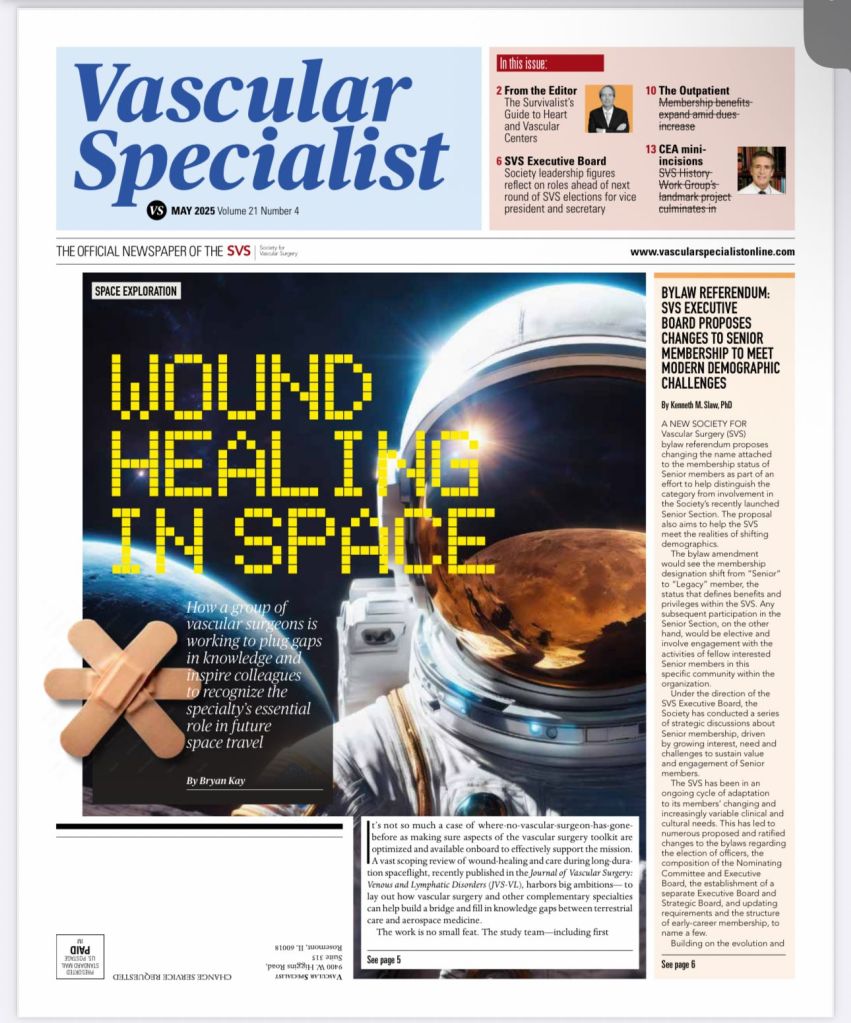
Read the full issue online here: https://vascularspecialistonline.com/vascular-specialist-may-2025/.
Dora Babocs1, Krishi Korrapati2, Cooper Lytle2, Monika L. Gloviczki3, Gustavo S. Oderich4, M. Mark Melin5, Rowena Christiansen6. Wound-Healing and Onboard Care During Long-Duration Human Deep Space Exploration from a Surgical Perspective through the lens of a scoping review. Journal of Vascular Surgery: Venous and Lymphatic Disorders Review article, DOI: 10.1016/j.jvsv.2025.10224, 102249, April 15, 2025, Open Access.
Nunzio Franco, Dora Babocs, Siddharth Rajput, Chapter 7 – Surgery in spaceflight, Editor(s): Chayakrit Krittanawong, Precision Medicine for Long and Safe Permanence of Humans in Space, Academic Press, 2025, Pages 79-89, ISBN 9780443222597, https://doi.org/10.1016/B978-0-443-22259-7.00014-X.
Nunzio Franco, Dora Babocs, Rowena Christiansen, Laura M. Drudi, Siddharth Rajput, Chapter 27 – Vascular surgery in spaceflight, Editor(s): Chayakrit Krittanawong, Precision Medicine for Long and Safe Permanence of Humans in Space, Academic Press, 2025, Pages 435-444, ISBN 9780443222597, https://doi.org/10.1016/B978-0-443-22259-7.00037-0.
Dora Babocs, Heather Barnhart, Caroline Fife, M. Mark Melin, Chapter 34 – The lymphatic system in spaceflight: The known, unknown, and theoretical, Editor(s): Chayakrit Krittanawong, Precision Medicine for Long and Safe Permanence of Humans in Space, Academic Press, 2025, Pages 537-561, ISBN 9780443222597, https://doi.org/10.1016/B978-0-443-22259-7.00029-1 .
Dora Babocs, Angela Preda, Rowena Christiansen, Cis-lunar and surface missions: Health risks and potential surgical conditions, Journal of Space Safety Engineering, 2024, ISSN 2468-8967, https://doi.org/10.1016/j.jsse.2024.04.005.
Dora Babocs, Angela Preda, Rowena Christiansen, Reaching Mars: Medical risks and potential surgical conditions in the Martian environment and during long-duration spaceflight, Journal of Space Safety Engineering, 2024, ISSN 2468-8967, https://doi.org/10.1016/j.jsse.2024.09.002.
Babocs, Dora; Melin, Matthew Mark; Rajput, Siddharth; Oderich, Gustavo S.; Christiansen, Rowena. Pioneering Space Surgeons: Matching Skills to Mission Needs – Determining the Essential Surgical Expertise for Mars Missions. Aerospace Medicine & Human Performance, 2024, Vol 95, Issue 8, p595. ISSN 2375-6314.
Margaret Siu, Dana Levin, Rowena Christiansen, Edward Kelly, Reginald Alouidor, Tovy H Kamine. Prophylactic splenectomy and hyposplenism in spaceflight. Aerospace Medicine and Human Performance, Volume 93, Issue 12 (2022).
Presentations
Australian Space Research Conference, 24-26 November 2025, Melbourne, Victoria, Australia.
Paper ID: 69, Title: Wound-Healing and Onboard Care During Long-Duration Human Deep Space Exploration from a Surgical Perspective through the lens of a scoping review
Authors: Krishi Korrapati, Cooper Lytle, Dora Babocs, Rowena Christiansen, Mark Melin (joint senior author and presenter)Paper ID: 70, Title: Impact of the Space Environment on Critical Mission Tasks: Assessing Surgical Performance during Long-Duration Spaceflight
Authors: Anay Ashwin (presenter), Dora Babocs, Krishi Korrapati, Hyun Yi Woo, Arbaz Khan, Adrian Ramirez, Divy Kumar, Rowena Christiansen (senior author)Paper ID: 77, Title: Automating Robotic Surgery for Spaceflight: Large Language Model (LLM) Integration to Foster Astronaut-Robot Collaboration
Authors: Divy Kumar, Jonathan Szeto, Michael Oblich, Benjamin Weiss, Aditya Khandeshi, Rishi Jain, Dillan Prasad, Dora Babocs, William Metcalf-Doetsch, Rowena Christiansen (senior author and presenter)Paper ID: 87, Title: The Role of Prophylactic Appendicectomy in Expeditionary Medicine: A Systematic Review
Authors: Brett Berezowski, Dora Babocs, Rowena Christiansen (senior author/supervisor and presenter – poster)Paper ID: 88, Title: Perioperative care of the space surgical patient as a holistic concept – exploring an integrated system of care for the “before”, “during”, and “after” of the patient journey
Author: Rowena Christiansen (presenter – oral)Paper ID: 89, Title: International pathways for aerospace medicine education, training, and accreditation – where to from here?
Author: Rowena Christiansen (presenter – poster)Paper ID: 90, Title: Space health for medical students to inspire ‘the next generation’
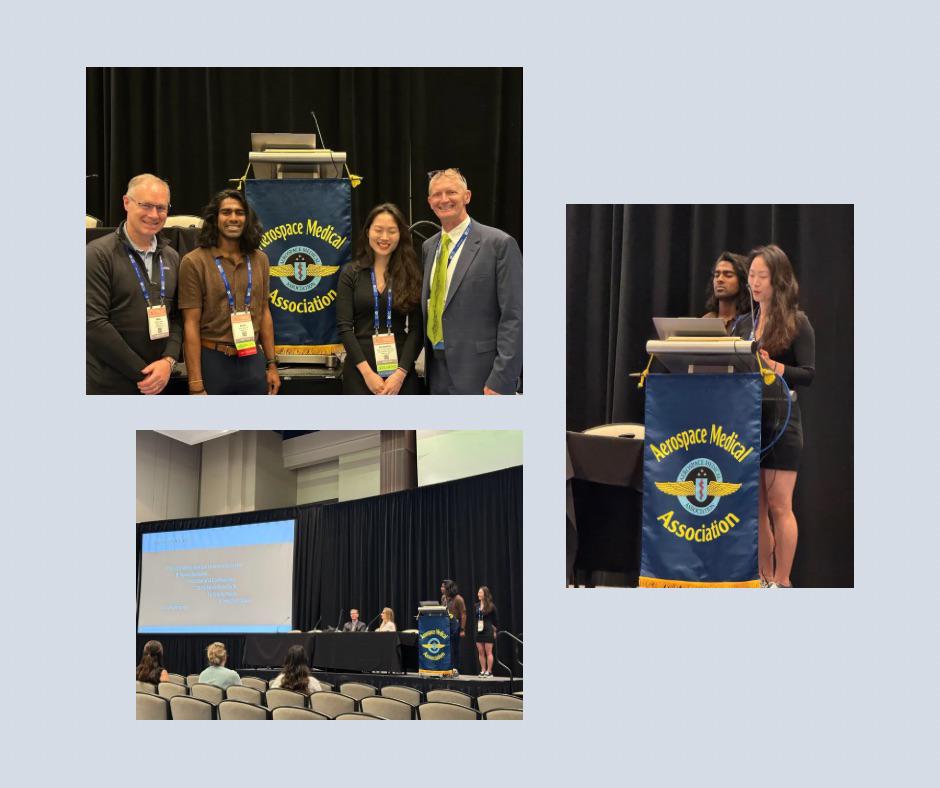
Author: Rowena Christiansen (presenter – oral)Congratulations to our Research fellows, Krishi and Jacqualine, for their successful panel presentation at the 2025 Aerospace Medical Association (AsMA) Annual Scientific Meeting (see the images to the right).
Rowena Christiansen. Perioperative care of the space surgical patient as a holistic concept – exploring an integrated system of care for the “before”, “during”, and “after” of the patient journey. Space Surgery Symposium, 01 April 2025, Houston, TX, USA.
Dora Babocs, Matthew Mark Melin, Roya Ghafoury, Hyun Yi Woo, Daeun Oh, Siddharth Rajput, Gustavo S Oderich, Rowena Christiansen, Pioneering space surgeons: matching skills to mission needs and determining the essential surgical expertise for Mars missions. 5/5-10/2024. The Aerospace Medical Association’s 94rd Annual Scientific Meeting. Chicago, IL, USA.
David B. Wexler, Thomas 5. Hoffman, Heather Panic, Brooke Stephanian, Sophie Hutton, José Pedro Correia, Kuntzman, Dora Babocs, Marian B. Sides. ENT considerations for potential commercial spaceflight passengers: a scoping review. 5/5-10/2024. The Aerospace Medical Association’s 94rd Annual Scientific Meeting. Chicago, IL, USA.
Dora Babocs, Matthew M Melin, Gustavo S Oderich, Rowena Christiansen, From a Surgeon’s Perspective: Factors Influencing Wound Healing During Long-Duration Human Deep Space Exploration. 2024 NASA HRP Investigators’ Workshop (IWS), February 13–16, 2024. Galveston, Texas, USA
Dora Babocs, Matthew M Melin, Gustavo S Oderich, Rowena Christiansen, Surgical Concerns from Accelerated Atherosclerosis During Long-Duration Spaceflight. 2024 NASA HRP Investigators’ Workshop (IWS), February 13–16, 2024. Galveston, Texas, USA
Dora Babocs, Gustavo S Oderich, Matthew M Melin, Rowena Christiansen, Traditional Surgical Methods and Cutting-Edge Techniques: Pioneering Endovascular Surgery in Long-Duration Human Space Exploration. 2024 NASA HRP Investigators’ Workshop (IWS), February 13–16, 2024. Galveston, Texas, USA
Dóra Babócs, Angela Preda, Rowena Christiansen, Cis-Lunar and Surface Missions: Health Risks and Potential Surgical Conditions. Oral Presentation. International Astronautical Congress 2023, Baku, Azerbaijan, 2-6 October 2023.
Dóra Babócs, Angela Preda, Rowena Christiansen, Reaching Mars: Medical Risks and Potential Surgical Conditions in the Martian Environment and Onboard. Oral Presentation. International Astronautical Congress 2023, Baku, Azerbaijan, 2-6 October 2023.
Surgical Disciplines in Long-term Spaceflight. Poster presentation. 5/21-25/2023. The Aerospace Medical Association’s 93rd Annual Scientific Meeting. New Orleans, LA, USA. Recorded
Snapshots

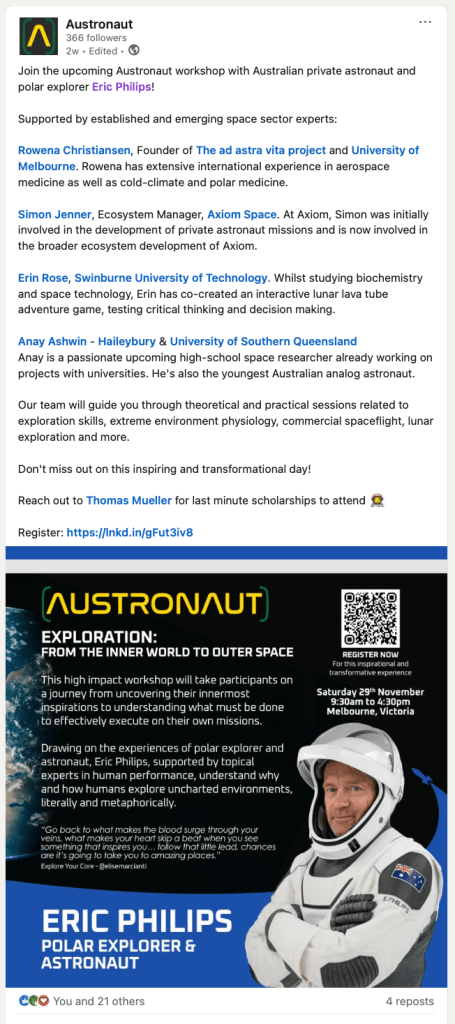
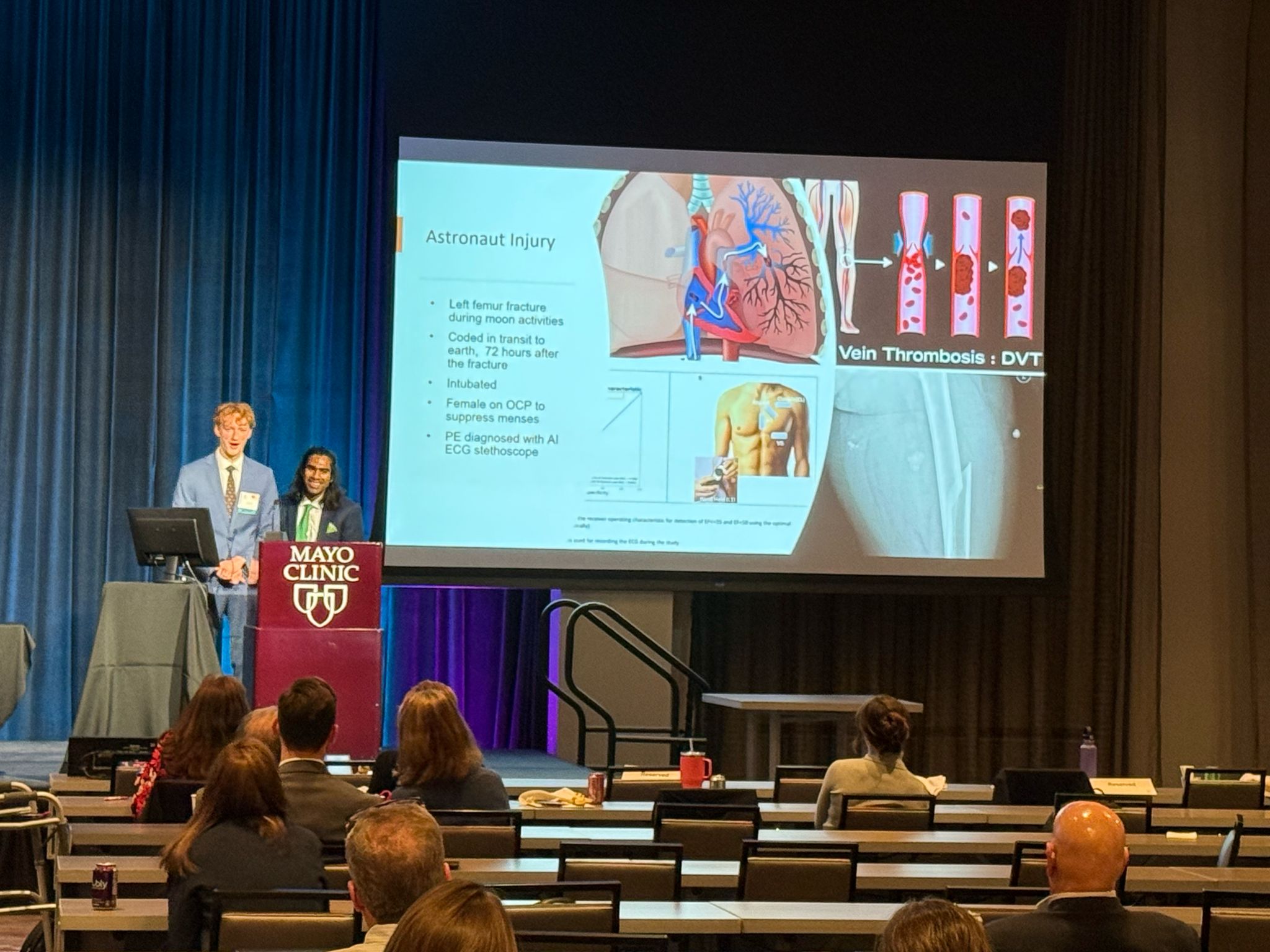
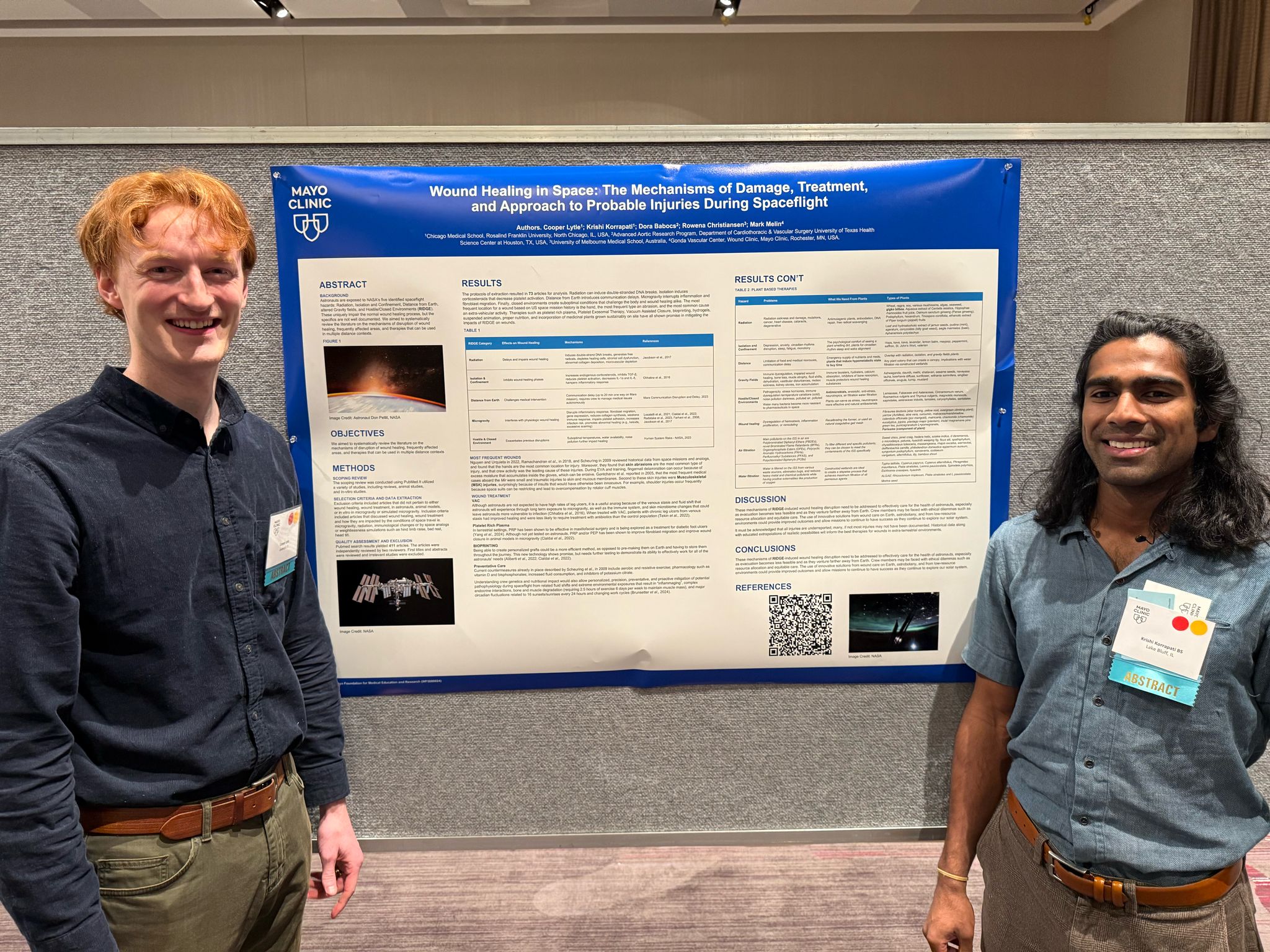
Sincere thanks and congratulations to Krishi and Cooper on presenting our poster on Wound Healing in Space and for their case-study presentation at the Mayo Clinic Wound Symposium (26-28 February 2025)! ✨🚀🚀

Apply to Join Us
If you are interested in joining us, click on the button below to view our application form. New applications will be reviewed by the Co-Leaders as they are received, and applicants informed of the outcome.
 the ad astra vita project